Introduction to Antennas
|
In the 1890s, there were only a few antennas in the world. These rudimentary devices were primarly a part of experiments that demonstrated the transmission of electromagnetic waves. By World War II, antennas had become so ubiquitous that their use had transformed the lives of the average person via radio and television reception. The number of antennas in the United States was on the order of one per household, representing growth rivaling the auto industry during the same period.
By the early 21st century, thanks in large part to mobile phones, the average person now carries one or more antennas on them wherever they go (cell phones can have multiple antennas, if GPS is used, for instance). This significant rate of growth is not likely to slow, as wireless communication systems become a larger part of everyday life. In addition, the strong growth in RFID devices suggests that the number of antennas in use may increase to one antenna per object in the world (product, container, pet, banana, toy, cd, etc.). This number would dwarf the number of antennas in use today. Hence, learning a little (or a large amount) about of antennas couldn't hurt, and will contribute to one's overall understanding of the modern world.
|
|
Video Overview of Antenna-Theory.com and Intro to Antennas Back: Antenna Theory
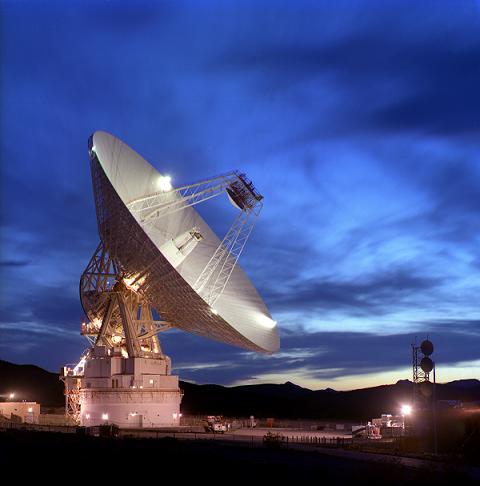
A 70-meter dish antenna. Part of NASA's Jet Propulsion Laboratory (JPL) communication system.
|
Copyright 2009-2010 Antenna-Theory.com
All rights reserved.
This page on antennas can be printed at will, but if you reproduce it on the internet
please link back to the source page.
Back: Antenna Theory Homepage